

My morning starts with a quest: how to brew coffee when there is no electricity. It’s supplied chaotically for 2 hours a day, and this morning I was out of luck.
A small stove with a gas cylinder stands in my kitchen. This gadget has become as much a part of daily life as an iPhone.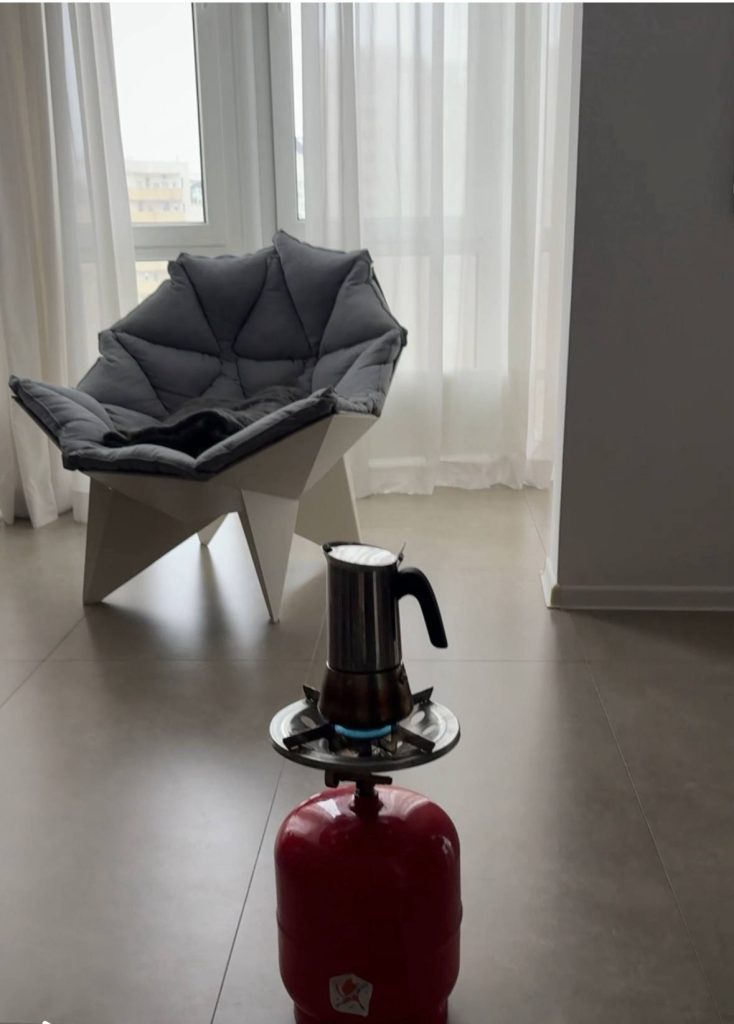
Water is finally running from the tap—that’s already wonderful. After several massive Russian shellings that left Kyiv without electricity, water, and heat, familiar household things are perceived completely differently.
We know that the front is the worst. But now I receive messages from military friends who are in icy dugouts under shelling. They write, “If women and children are freezing in the civilian areas, in their own apartments—this goes beyond all limits.” This goes beyond warfare. It is the deliberate destruction of civilian life.
Russia is doing everything to break our civilian areas. It destroys infrastructure, freezes us, sows chaos, and forces us to flee. But we are staying. Because if people leave Kyiv, the capital will turn into a ghost. And who will the army then defend if the city is empty? The front holds as long as the cities behind it hold.
So we are here. It’s 14°F outside, and -4°F is promised next week. The radiators are barely warm—the hot water simply doesn’t reach the 20th floor.
The hardest part is the children. Try to explain to little girls why they need to wear two pairs of pants, three sweaters, and warm socks at home. And why it was comfortable recently, but now it’s so cold. And what would you answer to the question, “Mom, why do the neighbors want us to freeze? Why do they hate us so much?” We are forced to tell them—children aged 6 and 11—about the nature of evil.
We sleep under three blankets, huddled together like penguins. And our room is lit by Christmas garlands—not for a festive mood, but because they work the longest from a power bank.
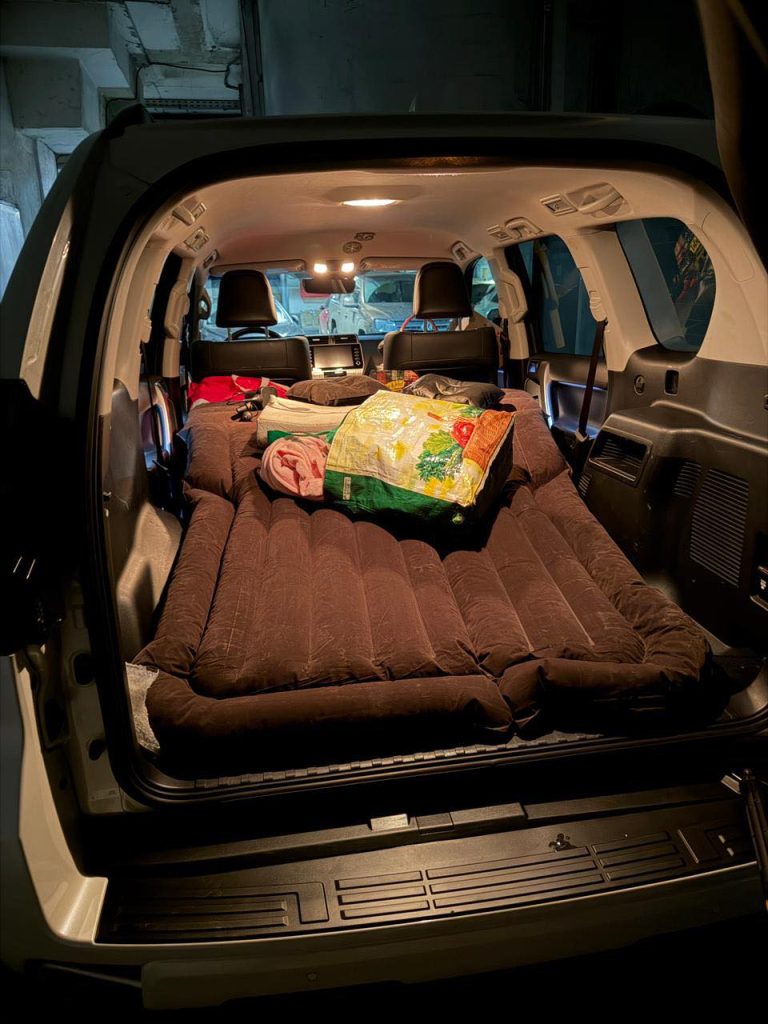
We have a “plan B.” Our car is parked in the underground lot, with an air mattress, pillows, and blankets inside. This is in case of night shelling. My children know: if the siren sounds, and there are Russian drones and missiles in the sky, we run to the car to get more sleep. This is our new reality.
I am not writing this to complain. I am a successful entrepreneur; I am used to solving problems on my own. But I want my country to be heard, and for my children not to live in medieval conditions.
So we gathered. I’m taking my daughters to a private school: they have a powerful generator, so the children have light and warmth. This is an exception, as all state schools in Kyiv are closed. Most children in the capital are on forced holidays—until the cold weather ends.
I’m heading to the office. It’s large and modern, with glass walls and a fantastic view of Kyiv. But now it’s a beautiful castle made of ice. We bought a special gas burner for heating. But without centralized heating, the temperature still rarely rises above +57°F.
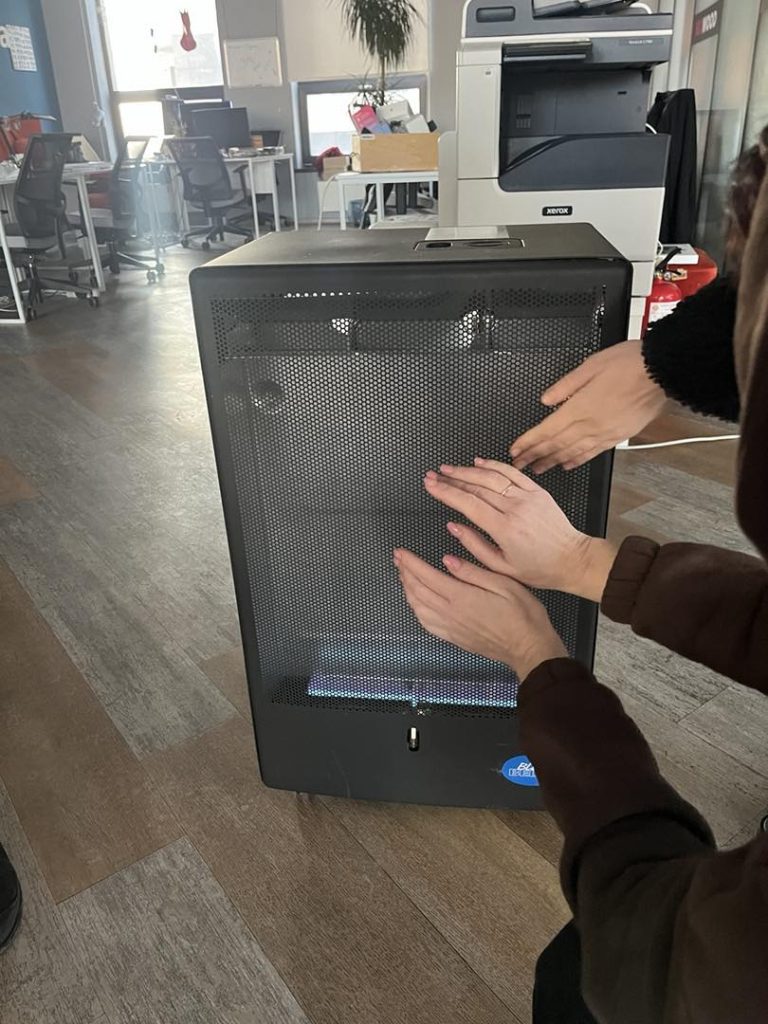
We also have batteries and a few hundred power banks that we charge when the electricity is on. Our goal is to have enough power for at least 10 hours of autonomous work.
I understand all the problems and allow employees to work from home. But you know what? People come to the office; for many, it’s even colder at home. The office has become an “Unbreakable Point.”
We adapt. Ukrainians always do. We support small businesses—we buy coffee in cafes and food in pizzerias that are buzzing with generators. We even find reasons for jokes. But when you live like this for weeks and months, knowing what normal civilization looks like, it’s exhausting. It weighs on the psyche.
But the cold and the lack of electricity for 20-22 hours is just the tip of the iceberg. While we are warming our hands on coffee cups, a catastrophe is unfolding beneath our feet.
Kyiv is one step away from a sanitary collapse. Due to the frost and lack of stable electricity supply, the sewerage is freezing. Pipes are bursting, the ground is freezing a meter deep, deforming the networks. Ecologists are sounding the alarm: we risk getting “dead zones” in the Dnipro River and outbreaks of infections as soon as it gets warmer. This is a threat of water poisoning used by millions of Ukrainians.
The World Bank report that I studied before my trip says 3.5 billion people in the world do not have access to safe sanitation. Ukraine—a European state—is now fighting not to become part of this statistic. According to the World Bank’s Fourth Rapid Damage and Needs Assessment, before the war, approximately 70% of Ukraine’s population had centralized water supply. As of 2024, about 9.6 million Ukrainians already needed access to water and sanitation services due to infrastructure damage. The cost of reconstructing water supply and sewerage systems in Ukraine is estimated at approximately $11.3 billion for 2025–2033.
The Kyiv authorities are in despair. Some officials, with no clear strategy for restoring the networks, openly discuss emergency solutions like digging cesspools. Public activists are submitting their proposals. Engineers and workers from all over Ukraine are repairing the systems—but after a few days, new attacks destroy the result.
We are balancing on the edge. If we do not maintain our energy and utility sector, the consequences will be felt for decades. A sanitary catastrophe has no bborders—contaminatedwater and epidemics will not stop at checkpoints.
I am finishing this text in a warm hotel room in Washington. Here the Wi-Fi works stably, hot water flows from the tap, and my high heels perfectly match the local dress code. But in a few days, I will return home. I will take off these heels, put on thermal underwear, wool socks, and a tracksuit. I will return to a reality where a European capital is fighting the cold, which is destroying not only comfort but the infrastructure itself.
We are strong. We are standing. But we need help to protect the basic human right to a dignified life. So that Ukrainian children, when they grow up, remember these days as a nightmare and not as their everyday life.


